'Unsolved Mysteries' Host Jordan Murphy Talks Updating a Modern TV Staple for YouTube

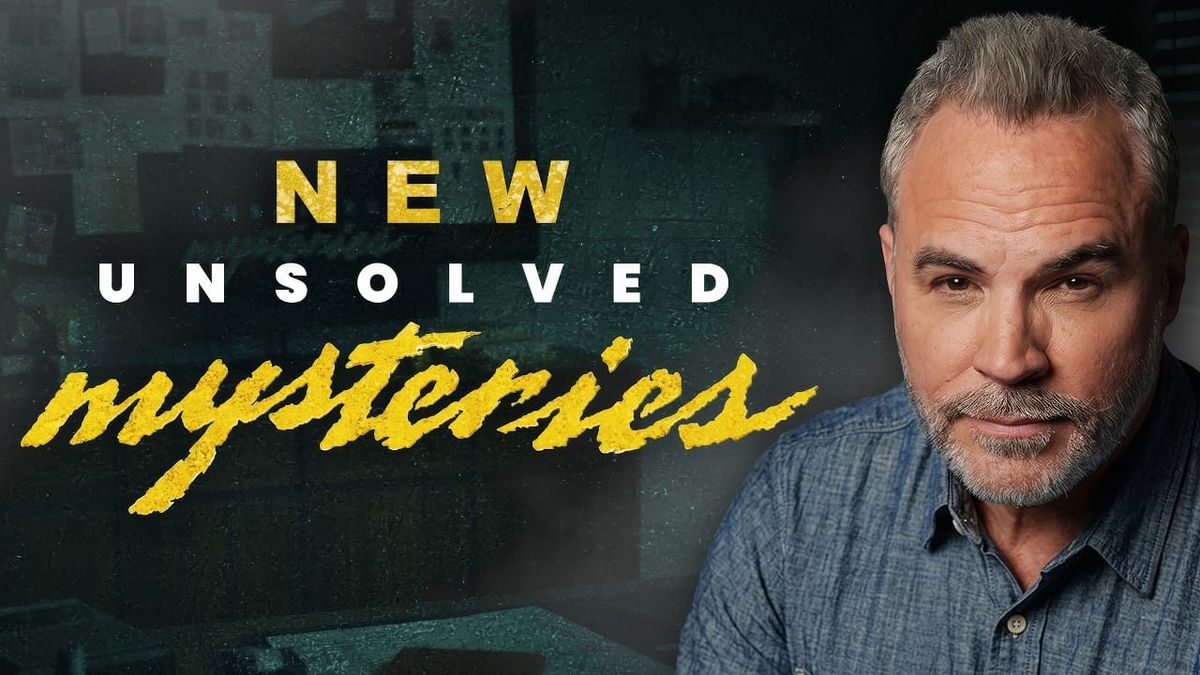
Last month, Unsolved Mysteries returned with a new format, a new home, and a new host. Jordan Murphy (The ReWrite) heads up a new take on the show that focuses on one case per week, with new episodes releasing every Thursday on YouTube. The new series largely eschews the re-enactments of events, which was a fairly common approach to true crime content in the 1980s (see also The Thin Blue Line from documentary filmmaker Erroll Morris), but has fallen out of favor since.
Created by Terry Dunn Meurer in 1987, Unsolved Mysteries feels, in a lot of ways, like the godfather of the modern "true crime" movement. Featuring a mix of true crime, unexplained phenomena, and inexplicable disappearances, the series centered on both interviews with survivors and dramatic re-enactments of the events described.
While classic Unsolved Mysteries aired on network TV and had dozens of episodes per year, the current version has migrated to YouTube – arguably the only place left where a TV series can reliably draw in the same audience size and have the same cultural footprint...especially if you want to deliver your message without charging the audience for entry.
Murphy joined us to discuss the latest iteration of the storied show.
Russ Burlingame: It seems like things move so fast on YouTube. I hadn't even heard of a new season until four days before you dropped the episodes or something like that.
Jordan Murphy:Yes. We dropped a trailer the week before, and then we dropped four [episodes] on October 29th.
Burlingame: How many episodes have you guys already put together for the first kind of season of new Unsolved Mysteries?
Murphy: It's so weird. YouTube anymore, it's not ABC, it's not- ... a network, so we don't have a traditional season, the way it used to be. Our season is 52 weeks. We're gonna keep delivering new episodes every Thursday, period. That's the way it's gonna happen right now. I wouldn't say there's any end in sight.
Burlingame: Let's rewind a little bit. Tell me a little bit about yourself, and how you ended up being the host of Unsolved Mysteries.
Murphy: I grew up in the San Francisco Bay Area. Always wanted to be an actor. Ultimately I moved down to Los Angeles to do just that, and I've hosted over 250 episodes of television, from USA Network, VH1, NBC. Hosting a lot of reality TV, essentially. I'm also a working actor. All that aside, it just so happens in 1992 when I was living up in the Bay Area, I auditioned for, and booked, a reenactment character on Unsolved Mysteries. So that's a weird full circle. Couldn't have predicted that, right?
One day, I got a email from my manager saying, "Hey, they're auditioning for a new host for a reboot of Unsolved Mysteries on YouTube." I was like, "What? The Unsolved Mysteries? Is this legit?" So I put myself on tape, and I submitted it, and then I got brought in by Terry and the team here, and we had an amazing meeting, and, hoops and hoops down the line.
I think you'd have to ask them why they ultimately chose me. I'm also very much a true crime....I hesitate to use the word "fan," because the last thing we wanna do is make this entertainment, in the sense of the fact that these are actually real families with real tragedy that need closure and justice. I don't want to do that. But I do watch a lot of true crime – much like the rest of our country – and I have for quite some time, so I'm very curious about the subject.
I'm also very paranormal-curious. I'm the guy who will talk to you about UAPs if you want to, and the paranormal, so I think that my interest and my curiosity was perhaps also something that worked for the producers. I think my experience being on camera, holding a space, interviewing people, as well, and also my genuine interest in the subject matter [contributed].
Burlingame: On-camera interviewing is a necessary skill to make this version work. Historically the reenactments are the, the kind of the meat and potatoes, but so far that's very limited, and it's more about interviews.
Murphy: Exactly. The whole point was to go away from the reenactments. Obviously, it's a little ironic considering that's how I got my start; it's literally how I got my SAG card. But now we've done away with them, at least for the time being. It's really gone into more of a documentary format, with real people, real interviews, actual case images, video, things like that.
Actual family members, actual retired officers. The focus becomes much more the people, their story, their struggles, and ultimately trying to shake the tree for any possible new tips, and hopefully breathe some life into what, in many cases, have become cold cases.
Burlingame: The other big change so far is that every episode is a full-length deep dive into a single case, as opposed to being an anthology. Can you as the host speak to what went into that decision?
Murphy: Yeah. If you recall from the Robert Stack days, it was three segments per hour-long episode, and now we're doing 35 to 40 minute-episodes of one particular case. It really just came down to the way this medium of YouTube is – what works on this medium.
There wasn't a, "We're gonna do it this way because...." I think a big part of this also was the "why" of why it even came back, why it's on YouTube. It's the audience was waiting [there]. They wanted more, and with this technology, we have this time in our lives where our community of Unsolved Mysteries, the community of armchair detectives – can really engage with us in real time in a way that Robert Stack would've only hoped that he could've had. Being able to have one episode that we can focus on each week, keep it simple, keep it clear, is an opportunity. After the first four episodes, it was staggering how many people immediately engaged in exactly the way we would've hoped to: Theorizing, providing suggestions, providing bullet-point breakdowns of concepts and ideas. It was incredible. And then on top of that, we're having Nick Cordova's wife, or Joey LaBute's dad literally engaged in audience communication in real time, which would never have happened in the past.
It's really what I think is amazing about what YouTube is offering us. When we were doing Netflix, it was, like, nine episodes every couple years, and you had to wait these long periods of time. People enjoyed it. I don't want to take away from what we did. But the way this is now really allows us to land back in the actual mission of the show, which is to at least from my perspective, to be a voice for those who can't be heard anymore, and a support for the families who are probably exhausted, and law enforcement who are exhausted and overwhelmed. We can breathe a little bit of new life into these cases otherwise were stalled, and now the actual audience can immediately participate and immediately give their points of view, and hopefully rattle something, send it into the comments, send it to unsolved.com.
And we look at all of them. We look at every single one of them, and when we get that information, we send it to the appropriate sources.
Burlingame: In a lot of ways, I feel like Unsolved Mysteries and America's Most Wanted invented the the true crime genre as we know it today. How does that and does that put pressure on you guys to distinguish yourselves from That Chapter and Mr. Ballen, and all these other high production value, high-quality true crime and mystery shows that already exist on the platform?
Murphy: I think that what I feel we stand for, and have stood in for the last four decades, is our attention to detail, the fact-checking, the fact that our story producers – or you could just call them investigative journalists, but they're credited as story producers – they don't make things up. They don't speculate. They're going from actual case files, speaking to actual acting detectives or retired detectives, and that attention to detail, that honoring of whether or not a family does or doesn't want us to air something, or law enforcement does or does not want us to dig into it, we've been very respectful of those boundaries.
I'm not sure if I would say that "sets us apart," but it's where we stand, and I think it's what's allowed us to sustain for four decades. 1,300 cases and over 260 solved as a result of the work done by the team of Unsolved Mysteries, going back way before I was here.
Burlingame: All four of the launch episodes had some common threads in that they were disappearances where the family doesn't trust the official narrative. Obviously, there's hundreds of those cases out there in the world. How do you guys plan to approach spacing these things out so that it's, "Okay, we're gonna do a paranormal one this week, and a murder this week, and a missing person this week?"
Murphy: Good question. I am not the executive producer. So I really can't speak to the strategy or the reasoning as to why one episode comes out before another episode. I know that they are going to be spreading them out.
Obviously, we understand that the brand of Unsolved Mysteries is more than true crime. Because of the climate right now, and because true crime is important to actually explore and to solve, that's what we've led with – but we will get to the UAPs. We will get to the Amelia Earharts. We will get to the DB Coopers. We will get to the ghost stories. All of that will still be, and is, a part of Unsolved Mysteries, and that'll get unfolded as the episodes keep going.
Burlingame: Robert Stack was a talented and prolific actor, but for a lot of people, he's only ever thought of in that trenchcoat. How do you feel about being associated with a brand like that? Any ambivalence?
Murphy:No. I think there was a time when if you did movies, that's all you could do. If you did commercials, you couldn't do movies. I think that there's been a lot more of a broadening of what an actor can do and can get away with. If Kevin Hart can be hawking Pepsi, then we can do Unsolved Mysteries.
For the, for a few years when I first started doing the reality TV stuff, I had some concerns that people were just going to think of me as a reality show host. But at the same time, I've done CSIs, and NCIS, and Grey's Anatomy and Chicago Fire and General Hospital. It's not gotten in the way of me playing other characters on television shows or in movies. I have another movie that just dropped on Amazon.
Now, this is a little bit more of a different profile. You can't "hide" from this particular brand, obviously, so we'll see. But I'm not concerned about it, and I'm really just grateful to be a part of this.
You can follow the new Unsolved Mysteries on YouTube, and follow Murphy on Instagram. Tips and story ideas can be delivered to the production via the official website at Unsolved.com.