A New Day Job for the New Year: Welcome to Screen Rant
(Also, Guy Gardner: Warrior is the Best Version of the Character)
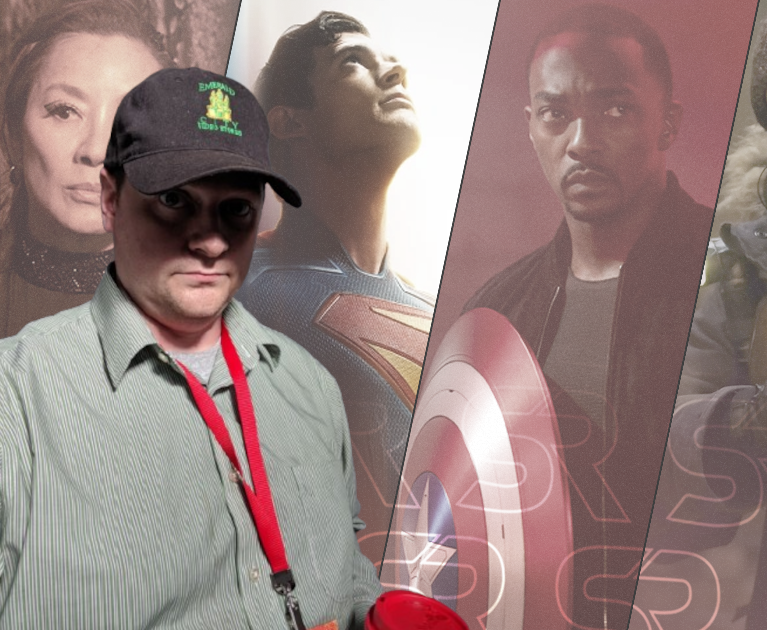
You know what George Lucas says about history: it doesn’t repeat itself, but it rhymes. After being laid off by my former employer on October 30th — just one day before Halloween — I officially joined a new company — the Valnet-owned Screen Rant — on December 26th — one day after Christmas. Thanks to New York State-related shenanigans that I’ll certainly rant about in another post, I never actually got any unemployment during that time, so the holidays were slightly stressful…although by the week of Christmas, I already knew that I would start training at Screen Rant before the New Year.
Huge thanks to my old ComicBook compatriot Megan Peters, who will be my section lead and who presumably put in a good word for me at the new gig. My title is Senior Reporter (Comics), and that means I’ll be totally focused on comic books and graphic novels, only touching tangentially on TV and film. That’s very exciting for me; I haven’t really done that as the primary part of my job in almost 10 years.
And damn, do I love comics.
Screen Rant, unlike ComicBook, is non-exclusive, meaning that the process of putting together ECV Analog projects is going to remain as simple as it has been for the last couple of months. Whereas I had to run the Josie and the Pussycats and Legends of Tomorrow books past folks at Paramount legal and HR, Valnet is actually pretty OK with me wandering off to build my brand somewhere else. I assume they figure it benefits them if their employees are seen as experts.
(To be fair, that flexibility and encouragement is something we had at ComicBook in the pre-Paramount days. I wasn’t there long enough during the Savage Ventures era to speak to it, but I suspect my old coworkers have fewer hoops to jump through, too.)
Screen Rant won’t change any of the other big developments I have made lately: I’m still writing copy for Oni Press, who have some truly incredible comics coming up very soon. I’m still doing “Getting the Fin Right,” my Savage Dragon column, at Comic Book Club. And, yes, both the Legends of Tomorrow and VelociPastor companions are still on the cards for 2025 (as long as The VelociPastor 2 comes out, which is something I don’t control).
And, to answer the big question on everyone’s mind: Yes, it’s Screen Rant. Two words, not one word with two caps. I had to double and triple-check because even internally I’ve heard it both ways.
As an added treat for anybody who has stuck around this long, I wanted to share a quick story I wrote kinda/sorta/not-really for Screen Rant.
As part of your onboarding process, you have to write a sample article to get you used to their very specific voice and style of writing. You had to use one of a number of approved prompts, then customize it to your expertise. The story is pretty short, actually, but what I decided to do was to write the version I would ordinarily write here (or at ComicBook back in the day), and then cut, alter, adjust for voice, et cetera. That means there’s a much longer and more “me” version of the sample article that existed in its very first draft. I figured I would share that, just for fun, so you can see where my head is at.
So, without further ado…
Warrior Was the Best Version of Guy Gardner
by Russ Burlingame
From an also-ran to a brain-damaged gym teacher to the biggest jerk in the history of the Justice League, Guy Gardner has been a fan-favorite since his introduction in 1968. But in terms of character growth, uniqueness, and standing in the DC Universe, he has never been as interesting as he was for the decade in between Zero Hour (1994) and Green Lantern: Rebirth (2004).
After stealing some headlines following the trailer for James Gunn’s Superman, lots of online fans are talking about DC’s Guy Gardner. The character, first created in 1968, will make his big-screen debut in the film, which is set for theaters in July of 2025. Over the years, Gardner has taken on a number of forms — some more heroic than others — but he has never been as interesting as he was during his much-maligned “Warrior” transformation.
Who is Guy Gardner?
Guy Gardner first appeared in Green Lantern (Vol. 2) #59, from writer John Broome and artist Gil Kane — the same team credited with creating Hal Jordan, the main Green Lantern in the DC Universe since the late 1950s. When Guy first appeared, it was as a potential backup Green Lantern for Hal, a fairly thankless role. The two would become friends, and then teammates, before Guy was injured during a mission, and presumed dead.
During some of those early appearances, Guy was jealous not only of Hal as Earth’s preeminent Green Lantern, but of Hal’s romance with Kari Limbo, Guy’s girlfriend, who also believed him dead. Guy, trapped in the Phantom Zone, managed to reach out telepathically to Kari to prevent her from marrying Hal — but in so doing, did tremendous psychic damage to his brain.
Guy slipped into a coma, during which time Kari stayed by his side — and for a while, it seemed like that would be the character’s happily-ever-after. Of course, if it was, we wouldn’t be here talking about him in the Superman trailer, would we?
When he recovered physically, Guy suffered a significant change to his personality. Now belligerent and abrasive, Guy took the form best known to fans as the Green Lantern Corps’s resident jerk. Following the events of Crisis on Infinite Earths, when the Justice League disbanded and was reformed under financier Maxwell Lord, Guy became the League’s resident jerk instead, serving as the Green Lantern for the Justice League International.
Keith Giffen, JM DeMatteis, Kevin Maguire, and their collaborators on Justice League/Justice League International completely reinvented a number of characters, making Booster Gold and Blue Beetle Ted Kord inseparable in the minds of readers and dialing up Guy's jerk-ass personality to 11. As with Beetle and Booster, Guy started to become "typecast" after JLI, with the comedic elements of his personality overtaking his other recognizable traits.
One might think that "Green Lantern, but a jerk" wouldn't be a huge draw...but we were coming up on the "extreme" 1990s, and Guy Gardner became a fan-favorite. While part of the Justice League International, he picked a fistfight with Superman -- but not before he fought Hal Jordan, lost, and was drummed out of the Green Lantern Corps. To get his powers and reputation back, Guy sought out the yellow ring originally worn by Sinestro, Hal's arch-nemesis. During the "Yellow ring" period, Guy actually had his own, self-titled comic book.
And then came "Emerald Twilight."
So what is the Warrior transformation?
The story arc, from writer Ron Marz and artists that included Darryl Banks, Romeo Tanghal, and Bill Willingham, and Fred Haynes, saw Hal Jordan suffer an emotional breakdown and kill the rest of the Green Lantern Corps. Guy had, essentially, been saved by his expulsion from the Corps. Right around this time, Guy lost his trademark bowl cut, got a new writer, and took on the codename "Warrior." The comic was re-titled Guy Gardner: Warrior, and soon, Guy started to notice that he hadn't heard from any of his Green Lantern friends in a while. Heading to the planet Oa -- the homeworld of the Guardians of the Universe, the Lanterns' bosses -- Guy learns that everyone is dead, including his old friend and Green Lantern trainer Kilowog, with whom Guy had served on the Justice League. After a brief battle with Hal Jordan -- now known as Parallax -- Guy's yellow ring was destroyed, leaving him powerless.
Losing his Green Lantern ring wasn't going to stop Guy from serving justice -- or seeking revenge on Hal -- so he set out in search of new powers, and found himself bonded with a suit of armor that gave him some new powers. He didn't have long to get used to it, though -- soon, Zero Hour: A Crisis in Time warped the reality of the DC Universe, and Guy's armor was replaced with a new look, complete with strange, unfamiliar tattoos all over his body. Just months after the title change, Guy's transformation into Warrior was complete.
In Guy Gardner: Warrior #0, by writer Beau Smith with artist Mitch Byrd, Guy's new look started to be explained: he had, secretly, been part Vuldarian -- a powerful race of aliens -- and after the extinction of his homeworld, he was now the last survivor of the race. His new powers mimicked the Green Lantern ring somewhat, in the sense that they allowed Guy to manifest his body into any weapon he could imagine -- but it was body horror rather than energy constructs that fueled the changes.
What was so great about Guy Gardner: Warrior?
Guy, who had been characterized as something of a nationalist xenophobe during the 1980s, was suddenly a stranger in a strange land -- the all-American jock with an alien backstory that he couldn't quite square with his previously-expressed beliefs. It was an interesting challenge for him, and to help him clear it, Smith brought in a batch of wacky new supporting characters straight out of an old film serial (indeed, the “Quest For Power” storyline had distinctly Allan Quatermain/Indiana Jones vibes). It quickly veered from “supernatural western” -- a genre Smith helped reshape in comics with his creator-owned series Wynonna Earp -- into a sci-fi epic, and in order to keep him grounded on Earth and in the DC Universe, Smith and company set Gardner up as the owner of a bar. Not a sports bar, though -- Guy's heroes on the wall were all superhumans, ranging from Golden Age masked vigilantes to fallen Green Lanterns. Warriors' bar was not only a dynamic setting for Guy Gardner: Warrior, but one of the best new locales introduced to the DC Universe as a whole during that time.
During his time as Warrior, Guy didn't only have to re-establish a heroic legacy while launching his own small business. He also took to space, where he not only learned secrets about his Vuldarian heritage, but freed a number of former Green Lanterns who had been sold into slavery after their rings stopped working during “Emerald Twilight.” He went from being the biggest jerk in the history of two superhero teams, to a respected member of the superhero community whose bar was a meeting place and safe space for Earth's heroes.
All the while, Smith made Guy's transformation believable. He befriended Arisia, an emotionally vulnerable former Green Lantern who had felt abandoned on Earth after the Corps collapsed, and together, they started to heal from the years of trauma caused by their Green Lantern Corps "glory days." Smith's stories and villains were compelling in and of themselves, and his embrace of humor in the comic (as evidenced by the cover of his terrific holiday issue of Guy Gardner: Warrior) helped the egomaniacal guy to have a little self-awareness.
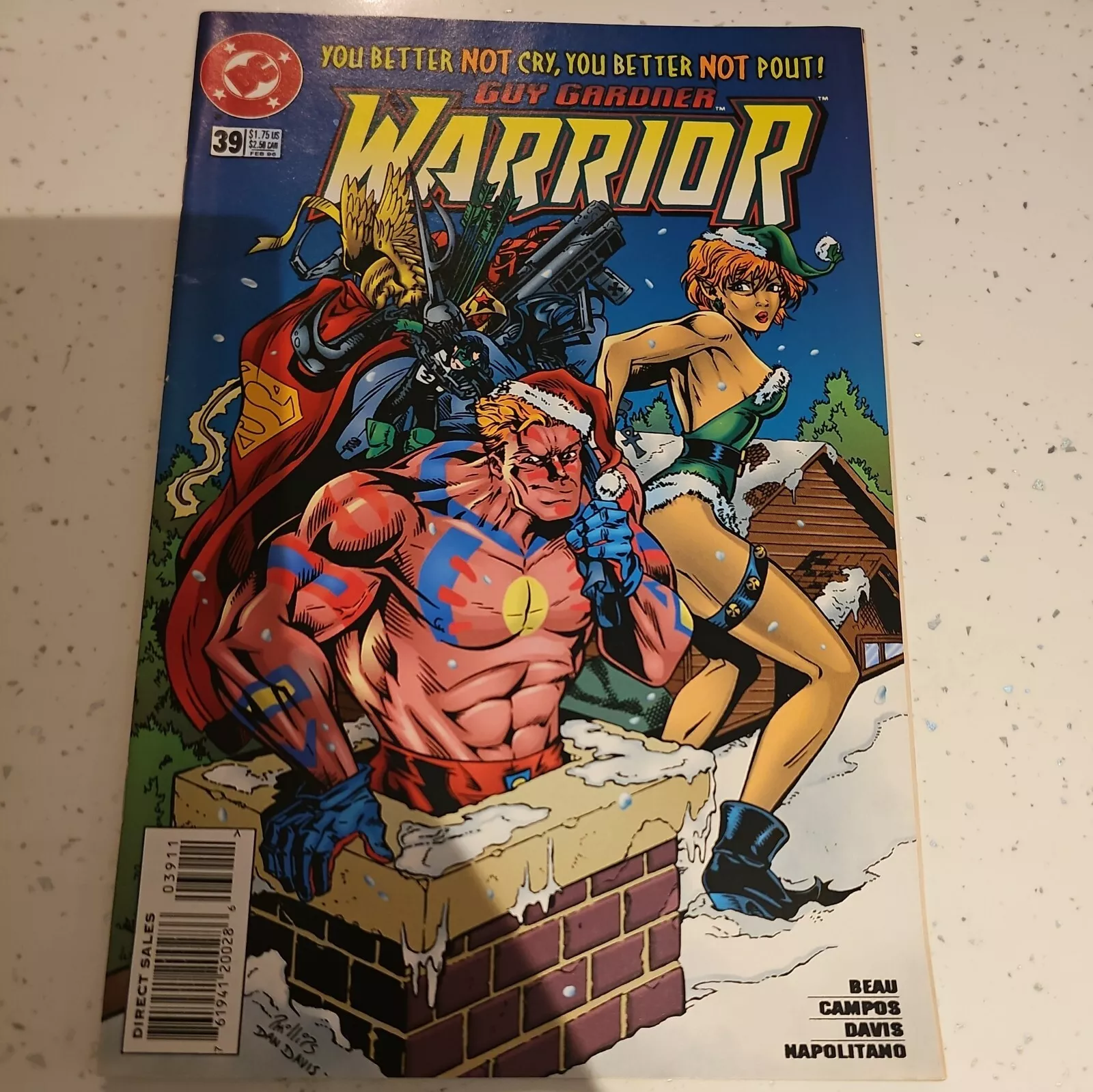
The Warrior title only ran for about two years -- and only for about 18 months did Guy have his trademark look and Beau Smith on board as writer -- but during that time, the character grew more than he had in the thirty or so years he had existed prior to Zero Hour.
"Every once in a while, you get a writer that clicks with something within the character that they are writing," Beau Smith told me in 2006. "When that happens, there is passion and investment. I had all that with Guy. My goal was to have Guy grow up a little, and show the readers that he was more than just a one-layer character. I wanted to show growth. I think I did that."
The book's sad legacy
After Smith's run on the book ended in 1996, Guy Gardner (as Warrior) continued to appear sporadically around the DC Universe for almost a decade. The bar was a favorite setting for Green Lantern stories in particular, and key scenes took place there during the Final Night crossover in late 1996. He never had his own ongoing again, and rarely had prominent roles in events and crossovers, but Warrior remained in the background, part of DC's diverse tapestry, and I believe the Vuldarian mythology established during Smith's run even played a Small role in the Jaime Reyes Blue Beetle comics.
By 2004, the Green Lantern title needed a bit of a refresh, and writer Geoff Johns decided to bring Hal Jordan back as the series lead. This led to Green Lantern: Rebirth, in which Guy was brought back to the Green Lantern Corps, his Warrior powers not really mentioned. A follow-up miniseries from Howard Chaykin would try to bridge the gap, explaining how and why Guy forsook his Vuldarian heritage and went back to the Green Lanterns, but the comic was poorly received, and ultimately most fans just kind of accepted the move as a soft retcon, rather than worrying too much about the Smith run and its complicated, controversial transformation of the lead character.
Unsurprisingly, a return to the Green Lantern Corps also meant a bit of a devolved Guy from a personality perspective, with his anger issues and ego taking center stage again. During 2011's New 52 reboot, he returned to the Justice League International alongside Booster Gold, Rocket Red, and some of his other '80s and '90s allies.
Even when he was (co-)headlining his own book (Green Lantern Corps) during the 2010s, Guy has struggled to set himself apart from other Earth Lanterns in the post-Geoff Johns era. Creators can only take "he's a jerk" so far, because nobody is writing it for comedy like Giffen and DeMatteis were. That means Guy is basically cut off at the knees without the character development he had during the Warrior years.
With the exception of a couple of issues that have been reprinted in Zero Hour-themed anthologies and the like, there have been no reprints of Beau Smith's Guy Gardner: Warrior run. To read it, you either need to buy the original issues or check them out on DC's unlimited digital service.