Easter Eggs, DC Universe References, and Predictions After Watching “Lanterns” Episode 2
Mogo doesn’t socialize.

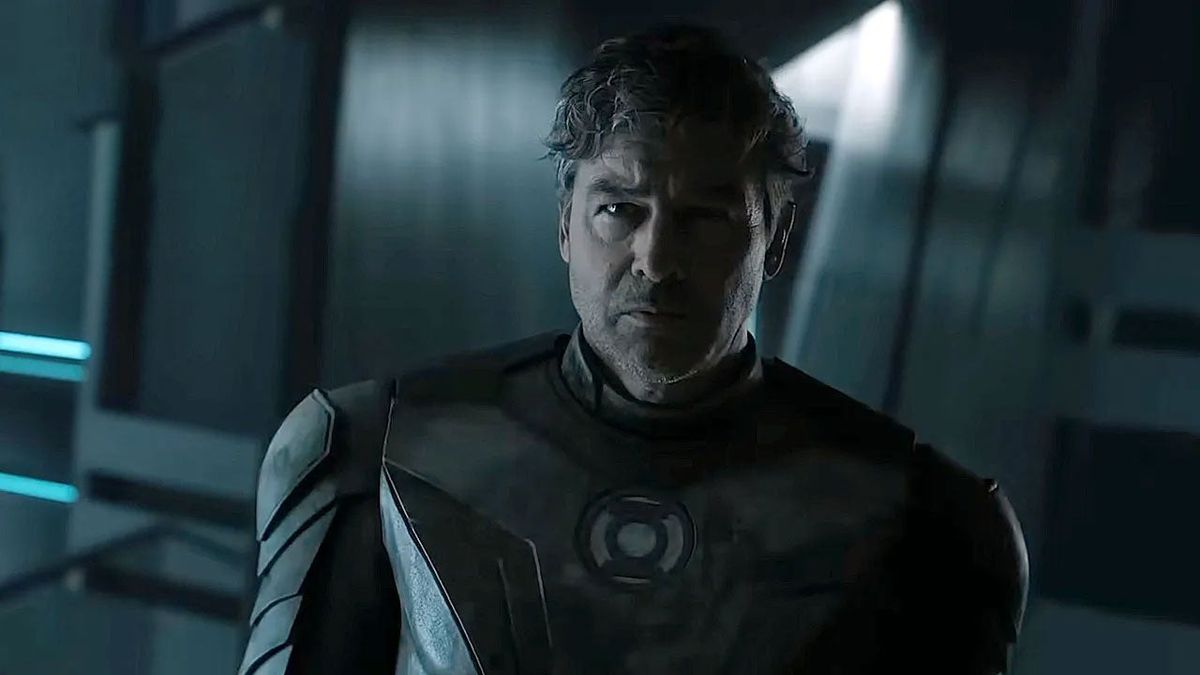
Lanterns aired its second episode today, and after the massive ratings success of the first episode, it seems likely people are going to be buzzing about a handful of fairly significant Easter eggs and references that popped up on the show, as well as some moments that seem to point in the direction of some of the most popular fan theories surrounding the series.
Yeah, that means this is a spoilers on kind of story.
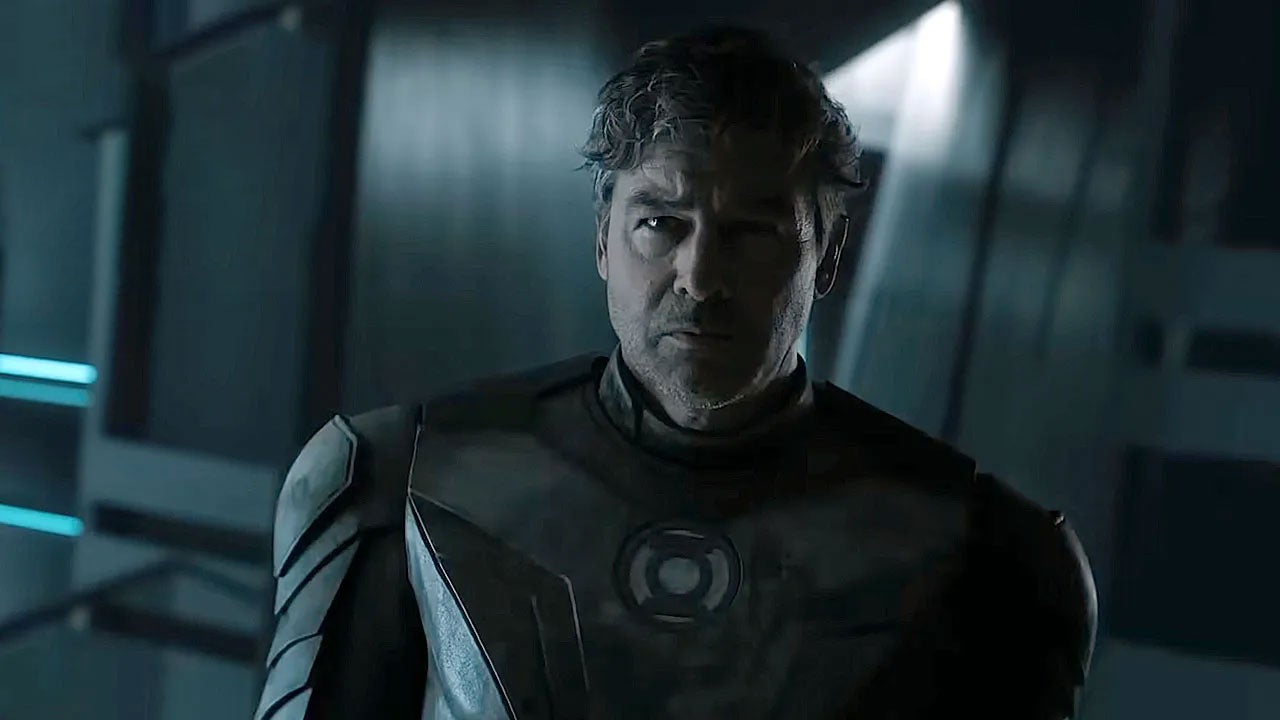
Fairly early on in the episode, we get the reveal that Hal’s ring was very low on charge. Therefore the show spent the whole episode (more or less) without powers for either Hal or John. The traditional lore had a hard 24-hour limit on ring charges, but changes made to the Corps in the mid-2000s made it a more normal “it runs out when you’ve used all the power” situation. That was alluded to last episode, when “Waylon” the alien asked Hal whether he had enough juice left to protect himself and the city from the bio-neutron explosive.
In theory, the ring is still supposed to protect the wearer from mortal harm even when it’s out of power, and shouldn’t be able to be removed -- which raises questions about last week’s episode, but there are a handful of explanations that might explain it...!
Hal owning a mansion is weirdly out of character, but could play into a popular fan theory we will get to later on. The fact that the power battery lives in a “pocket dimension” is interesting, considering that suggests Hal should be able to just access it from another access point and not need to be at home -- but he’s an old-fashioned guy and doesn’t seem to mind going without the ring for a few hours at a time. Maybe he really did just want to be rid of John for a while.
The voice key that lets Hal get into the safe is an Easter egg itself: “Mogo Doesn’t Socialize” is the name of a story by Watchmen creators Alan Moore and Dave Gibbons. In it, fans were first introduced to Mogo, a sentient planet who is a Green Lantern. He doesn’t socialize because…well, he’s a planet. His gravitational field would be disastrous for any other planet he got near.
The men who jumped John are not recognizable characters from the comics – at least yet. But the most popular theory for some time now, which tracks very well with the events of this episode, is that Paul Ben-Victor’s character – the leader of the aliens – is Atrocitus.
Atrocitus, originally named Atros on his homeworld, is a Green Lantern antagonist and the leader of the Red Lantern Corps. Where the Green Lantern rings are powered by will, the Red Lantern rings are powered by rage. His rage is primarily directed at the Guardians of the Universe, the aliens who gave the Green Lanterns their power.
Before they created the Lantern rings, the Guardians attempted an earlier peacekeeping force: The Manhunters. Robots who were powered by the same source that powers the Green Lantern ring, the Manhunters proved to be too rigid in their enforcement of the rules, and killed a lot of people who didn’t deserve it. At one point, they killed all but five people in space sector 666 – and of those five, one was Atrocitus, who saw his wife and kids murdered.
The thing is, in the comics, it is widely known that the Manhunters were created by the Guardians to serve the same purpose that the Green Lanterns would later serve. The fact that the Manhunters were too literal and rigid is likely why the power rings tap into emotion. That means, in the comics, Atrocitus hated Lanterns as much as he hated the Manhunters because he knows the Guardians are the ones who powered the Manhunters -- and he wants the Guardians and anyone close to them dead. It seems likely that at some point this season, it will come out that the Manhunters are a Guardians project, and that will provoke him against Hal and (possibly) John.
The idea that Manhunters can take on the physical characteristics of a human and therefore be killed like one will certainly fuel some of the speculation that it wasn’t really Hal who was found dead at the end of the pilot. That was already a popular theory, but the Manhunter angle isn’t one that was prevalent online this week.
The show’s obvious implication is that William Macon Sr. is a Manhunter, and his paranoia about aliens is really a paranoia about Atros. It would track narratively that he tried to get Hal on his side the same way Paul Ben-Victor’s character tries to recruit John. I do wonder if that’s too obvious, and the real reveal here is going to be that someone in Macon’s inner circle – maybe his wife or son? – is the actual Manhunter, and the compound is primarily designed to keep them safe.
Frankly, it’s possible there’s an army of Manhunters on that compound.
The decision to project the experience of watching a world die into John’s memory is an interesting one. For years, the most important story in all of John Stewart’s development was Cosmic Odyssey, in which John inadvertently causes the destruction of the planet Xanshi, an inhabited world. John was tortured by the mistake, and virtually every story for a very long time dealt with him feeling remorse and regret for the role he played in its destruction.
Projecting the death of Atros’s world into his head feels a bit like subjecting him to the psychological impact of watching a world die, without it being his fault. That’s an interesting way of approximating the Xanshi story while keeping John blameless in the whole thing.
Sinestro, seen at the end of the episode, is Hal Jordan’s greatest enemy – but first, he was Hal’s mentor. Once considered the greatest of the Green Lanterns, Sinestro was pushed into paranoia and ultimately turned fascist. His homeworld, Korugar, was believed to be an example of peace and order for the whole universe to aspire to, but in reality he was just running it as a dictatorship.
Hal related the issue to the Guardians, kicking off a series of events that would lead to Sinestro’s downfall. After his capture, he escaped and came into the possession of a yellow ring. The yellow rings are powered by fear, basically – to wield one, rather than fearlessness, you have to be able to instill great fear in others. It’s kind of the yin and yang of the Green Lantern ring, which has traditionally been depicted as being useless against the color yellow.
In the 90s, Hal went nuts and killed a whole lot of Lanterns, Sinestro, and all of the Guardians except one. It was later retconned in that he didn’t actually do it himself, but was effectively possessed by a being called Parallax – a cosmic fear parasite which was the source of the rings’ yellow impurity.
One of the most persistent theories so far is that Hal is already possessed by Parallax in the 2016 scenes – that’s why he’s so cavalier about the rules and why he’s got this lowkey death wish. I’m not sure I fully buy it, but if it’s true, having the hallways light up yellow as he makes his way across the Oan prison to see Sinestro is a cute bit of foreshadowing.
Sheriff Kane is now revealed to be from Gotham City. This almost certainly means that she is related by blood to Bruce Wayne. Martha Wayne’s maiden name was Kane, and there are two members of the Kane family – Bette Kane and Kate Kane – who are costumed heroes in and around Gotham. Bette is Flamebird, and Kate is Batwoman. It’s safe to assume that Kelly is not Kate, since one of Kate’s defining characteristics is that she is a lesbian, but the door is open for almost anything else.
Lanterns airs Sunday nights at 9 p.m. ET on HBO Max.