Peter Thiel is a ROME Guy, No Surprise.
Peter Thiel’s 3rd and fourth lectures on the antichrist, concretized and systematized his speculations on the nature and identity of a potential antichristic figure.

You can read the whole articles one and two on Thiel's sometimes insane, often tedious Antichrist talks by Jay PH on Esoteric.Media: Story ONE, Story TWO.
Jay PH
Peter Thiel’s third and fourth lectures on the antichrist, held on the 12th and 19th of October respectively, concretized and systematized his speculations on the nature and identity of a potential antichristic figure, though I was left with the distinct impression that Thiel was hedging his bets, a quality which has brought him great success as an investor.
Unfortunately, in his burgeoning second-act career as a public intellectual, bet-hedging just leads to the impression that he is either too cowardly or too poorly-researched to really put it all on the line to make a definitive statement about who or what the antichrist may be.
October 12: “Velocity of Antichrist”
Thiel’s October 12 lecture began with a recap of the timeline he has been exploring in the previous two lectures. His historiography revolves around the progression of scientific progress from the Enlightenment through the end of the 20th century, and it goes a little something like this: early modernity, with its promise of scientific progress and rapid development of the scientific method, led to a science boom, in which both scientists themselves and the public at large were deeply invested in the continued development and progress of this new social formation.
According to Thiel, this lasted until the end of World War II, when the development of the atom bomb cast a pall over the notion of science as a net benefit to mankind. This positivistic, uncritical support of science, in the wake of the bomb, turned to fear and the attendant management of that fear. This fear, and the bureaucratic managers set in place to quell it, then led to a stagnation of science and progress.
This fear, and the management class set in place to deal with it, has, according to Thiel, only grown in the intervening decades. Thus, he says, we have people like Eliezer Yudkowsky, the Bay-area rationalist and proponent of AI regulation. People like Yudkowsky, according to Thiel, have crippled progress and arrested the development of critical technologies like AI and exotic financial instruments, to the detriment of mankind at large.
This kind of argument is present throughout the entirety of Thiel’s lecture series. His specific enemies, both personal and institutional, as well as social trends that work against his portfolio, all manage to get named as antichristic forces, though he always manages to stop short of the crass notion that all of his enemies are antichristic because they oppose him specifically. Instead, he merely implies that his position coincides with the interests of The West more broadly, an entry-level metonymic argument that falls apart under even the briefest scrutiny. Realistically, Thiel’s understanding is that the interests of The West are colocated with the interests of billionaires like himself. No surprises there.
After this brief jaunt through his questionable historiography, Thiel moved onto a series of digressions about Pope Benedict XVI’s writings, religious art, and great men from history like Alexander the Great. This rapidfire series of references and gestures to great works provides what my brilliant colleague Jenny Rice might refer to as megethos, a rhetorical trope that appears as overwhelming evidence through sheer scale and speed, but, when examined closely, does not provide the argumentative scaffolding to produce a truly compelling argument.
Thiel’s arguments give the impression of completeness because they traverse a broad array of discursive fields: technology, religious scholarship, art, literature, political science, and so on. But, when you try to actually work through the arguments in terms of claims, warrants, and evidence, they come up short every time.
Like the conspiracy theorist, Thiel is under the impression that waving a huge stack of papers around is sufficient for an evidentiary claim, but, again like the conspiracy theorist, actually thinking through these arguments reveals him to be a self-aggrandizing crank with a lack of mastery over the material he engages. His arguments are a mile wide and an inch deep, which can appear impressive if you don’t know anything about the material he’s engaging, but as with his abysmal readings of everything from Gulliver’s Travels to Watchmen, his readings of the classics are either wanton speculation or purely propagandistic.
After his rapidfire series of statements about papal authority, historical heroes, and religious art, Thiel performed one of my favorite bits in his repertoire, one he has been busting out since his Paypal pitch meetings way back in 1999. He dangles a fistfull of cash out toward the audience, asking if anyone knows what it is. He goes on to question its value, before noting that money only has the value we perceive it have. He then asks the audience if they want it, since it has no intrinsic value. When, inevitably, someone says that yes, they would love to take Peter Thiel’s money, he disdainfully hands over the cash, gesturing to the audience as if his point is proven.

This tacky display of dorm room philosophy undergirds his central point for the lecture: that everyone wants and needs some degree of financial freedom, and that freedom is represented by the ability to take and give cash money to anyone for any reason. The antichrist, however, according to Thiel, opposes financial freedom, and wishes to impose strict controls on global financial transactions.
This argument should be familiar to anyone who has seen an evangelical conservative opine on the end times: the antichrist will institute the mark of the beast, a tracking system that will restrict financial freedom and contribute to the rise of a one-world government. This argument is part of the New World Order, or NWO, conspiracy theory in its more religious forms. Internationalism and multiculturalism are, according to this conspiracy theory, merely a cover for the antichristic forces that seek to destroy American exceptionalism and enslave the freedom-loving citizens of the United States.
Pat Robertson, Tim LeHaye, and now Peter Thiel have all endorsed this notion, which is meant to whip evangelicals into a frenzy to support the latest grift from their favorite TV preacher. Thiel seems to have noted the success of legendary liars like Jim Bakker, who sold his buckets of survival rations to good, fearful Christians certain that nuclear war was just around the corner, and now this constellation of rhetorical tactics are being deployed by Thiel to ensure that his fans are categorically opposed to financial systems that might be able to hold Thiel accountable for his many sins against mankind.
The systems specifically called out by Thiel were a motley crew, including international sanctions regimes, SWIFT payment systems, Canada’s Human Rights Tribunal, and the International Criminal Court. The ICC was a source of great ire for Thiel, as he complained that they had treated his good friend Bibi Netanyahu so unfairly, and that they posed a danger to any sitting US politician and policy maker.
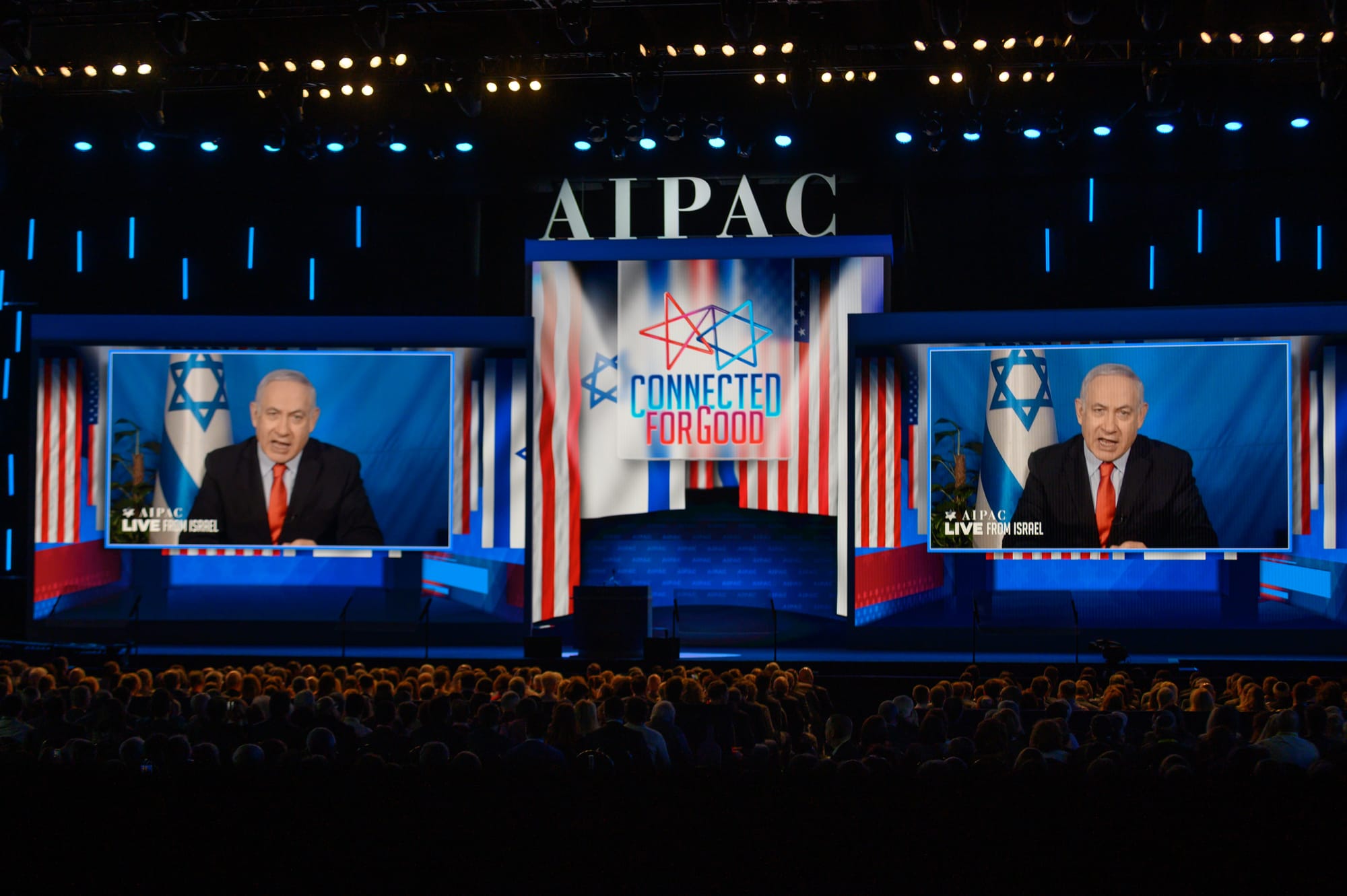
These institutions, according to Thiel, are antichristic insofar as they restrict freedoms, impose unfair sanctions on men of great conviction and power, and are unaccountable to him and his friends specifically. What was left unspoken by Thiel here was his very real and palpable fear that someone, some day, might force him to take accountability for his actions and the actions of the companies he has managed and founded.
One need not look hard to find innumerable examples of war criminals, financial criminals, and more in Thiel’s inner circle. Indeed, if you count Pete Hegseth and Bibi Netanyahu among your close friends, it makes perfect sense that the ICC keeps you up at night. Never mind his role in companies like Palantir and Anduril, whose entire business models are predicated on the United States never allowing the ICC jurisdictional control over who is and is not a war criminal in the US defense industry.
After decrying these institutions as antichristic authoritarian regime tools, Thiel tried to tie these disparate elements together by claiming that the antichrist would be a figure that fused the religious and the political, a philosopher-king that would be conversant in science, technology, politics, and the arts. The implication here is clear: Thiel wants the audience to consider that he is, himself, an antichristic figure.
This sort of edgy syllogistic rhetoric is common in Thiel’s writings and speeches, but he provided an important heuristic back in the second lecture that he can point to in case anyone accuses him of being the antichrist. Thiel has said that the katechon, a theological notion of that which holds back the antichrist and armageddon, can become the antichrist if allowed to stagnate. Thus, for Thiel, an America that acts as a libertarian utopia is katachontic, whereas an America that yields to international economic systems is antichristic.
Similarly, someone in Thiel’s position, he would argue, is katachontic. The centralization of power in the figure of a man like Thiel is, in his view, that which holds back armageddon and the antichrist. Thus, he has a built-in deflection from people asking, as Ross Douthat did when he interviewed Thiel, if he is the antichrist. Douthat is a credulous goon, to be sure, but even he was suspicious of Thiel’s claims, and that’s the correct response.
It is painfully transparent that Thiel’s goal with this lecture was to revive the time-tested NWO conspiracy rhetoric that has proven perennially popular with evangelicals, and he wants to shift the conversation to be about international payment systems, international courts, and international regulation. After all, Thiel no longer lives in America. He has fled to Argentina, as have so many others who have shared his politics over the decades, and he wants to be assured that he will escape culpability, socially and legally, for the forces of hell he has unleashed on this Earth.
I can only hope that we do not grant this wish.
October 19: “The New Rome”
Thiel’s October 19 lecture was consumed by discussion about what city constitutes the modern Rome, and how this would enable or constrain the rise of an antichristic figure. This seemed perfectly typical for this series of lectures, which have frequently engaged in terminally-online-conservative discourses. This final lecture engaged with one I find the most obnoxious and vapid: fake history nerds obsessed with how the fate of The West corresponds to their specific and niche political interests.
For Thiel, this meant taking his complaints about international financial and legal institutions and filtering them through the conservative preoccupation with Rome and its attendant social, economic, and cultural implications. In this worldview, imperial domination is good, great men are the fulcrum of history, and the plebeian class needs to stay in their lane and not disrupt the machinations of their betters.
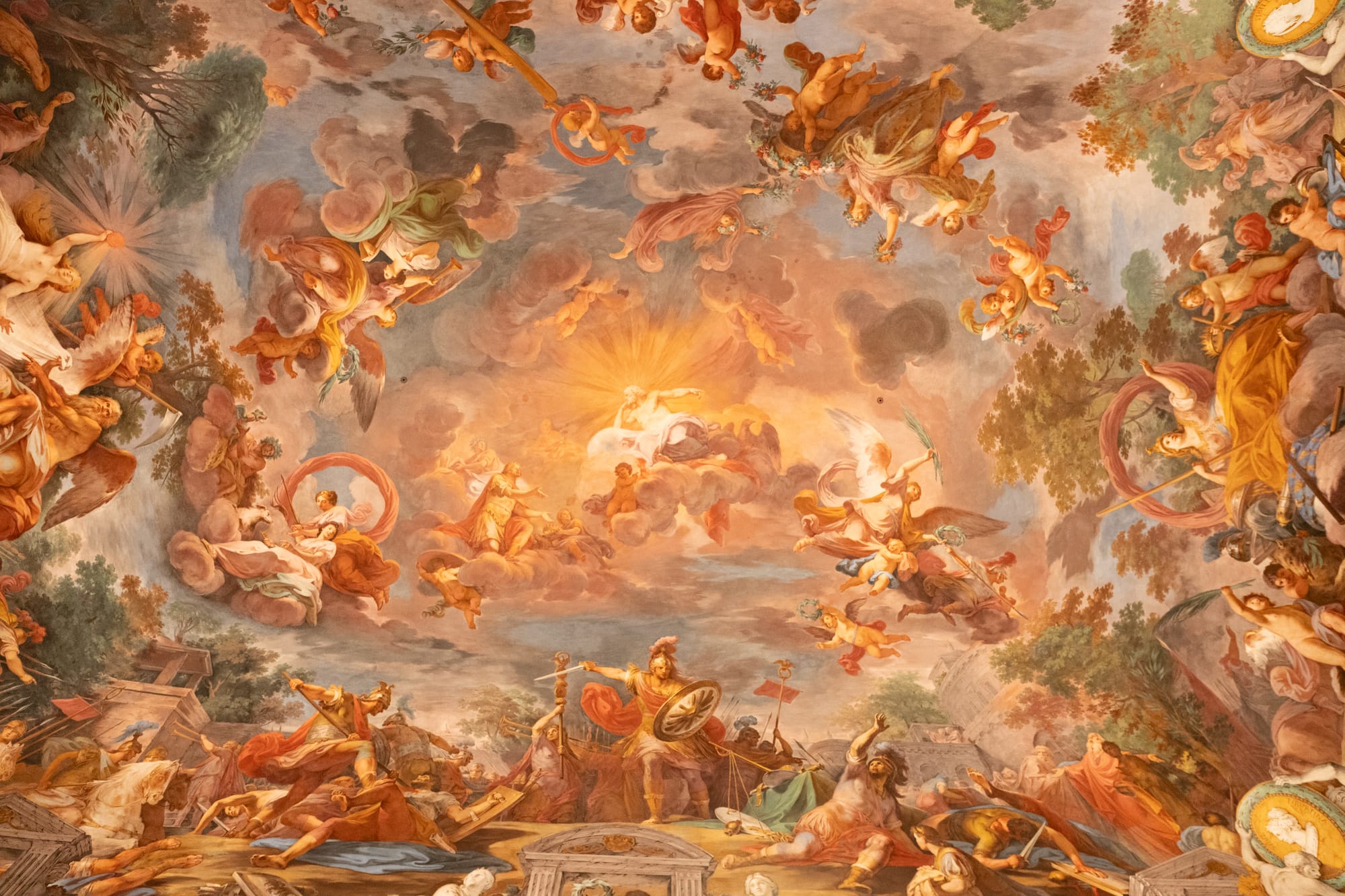
Of course Peter Thiel is a Rome guy.
He began the lecture by discussing the figure of the city. Cities figure large in the modern imaginary, discussed in terms of their economics and populations, but they also loom large as metaphors. Cities can be discussed in terms of their political leanings or metaphysical qualities just as easily as they can be discussed in more concrete terms, and Thiel suggested that “world cities” like New York or San Francisco serve as synecdoches for the entire world. By existing as a locus for culture, finance, business, food, art, and so on, a city like New York can serve as a metaphorical substitution for talking about global trends.
This is a fairly common claim that often serves as a springboard for opinion and culture writing, especially for inhabitants of these cities, and Thiel’s use of the trope fits into that trend, as he argued that America’s world cities fit in a lineage of Western imperial power that stretches back to Rome.
Why not support independent journalism?
Thiel deployed one of his patented charts-for-the-stupid showing an unbroken line of imperial power (traced with an arrow on his slide deck) that ran from Rome to the Byzantine Empire, from the Byzantine Empire to the Holy Roman Empire, from the Holy Roman Empire to the British Empire, and from the British Empire to the American Empire.
According to Thiel, each of these empires had at least one world city that served as a synecdochal stand-in for the entire Western world during the time of their ascendancy, and the American empire is remarkable in its capacity to hold multiple such cities. The eschatological purpose of these world cities is to serve as a concentration of power, which results in the katachontic ability of these great cities to hold back the forces of armageddon and prevent the emergence of the antichrist.
But not everything is sunshine and rainbows in the heart of imperial power, unfortunately, as Thiel went on to say that every katachon contains, at its core, the ability to turn into a locus of antichristic power. He pegged this to an empire’s ability to expand, saying that an empire is capable of holding back the antichrist if it still has expansion to do, but it can quickly become antichristic itself if its ability to expand is curtailed. This helps explain his opposition to intergovernmental and international organizations like the United Nations and the International Criminal Court, as they would hypothetically prevent a nation like the United States from exercising unilateral imperial military power.
Thiel then went on to explain the three qualities he believes a nation would have to exhibit to qualify as a “new Rome” for either katachontic or antichristic purposes. First, such a nation would need to be a military superpower. The monopoly on violence looms large in Thiel’s imagination, and as such his new Rome would need to be able to exercise unilateral military might against its enemies. Second, such a nation would need to be an economic superpower, specifically as it relates to the world’s reserve currency. I’m not sure how he thinks Rome had fiat currency, but just add that to the towering stack of anachronisms, red herrings, and historical misunderstandings that populate this lecture series. Finally, such a nation would need to be an ideological superpower, either through the dissemination of a language or a political programme.
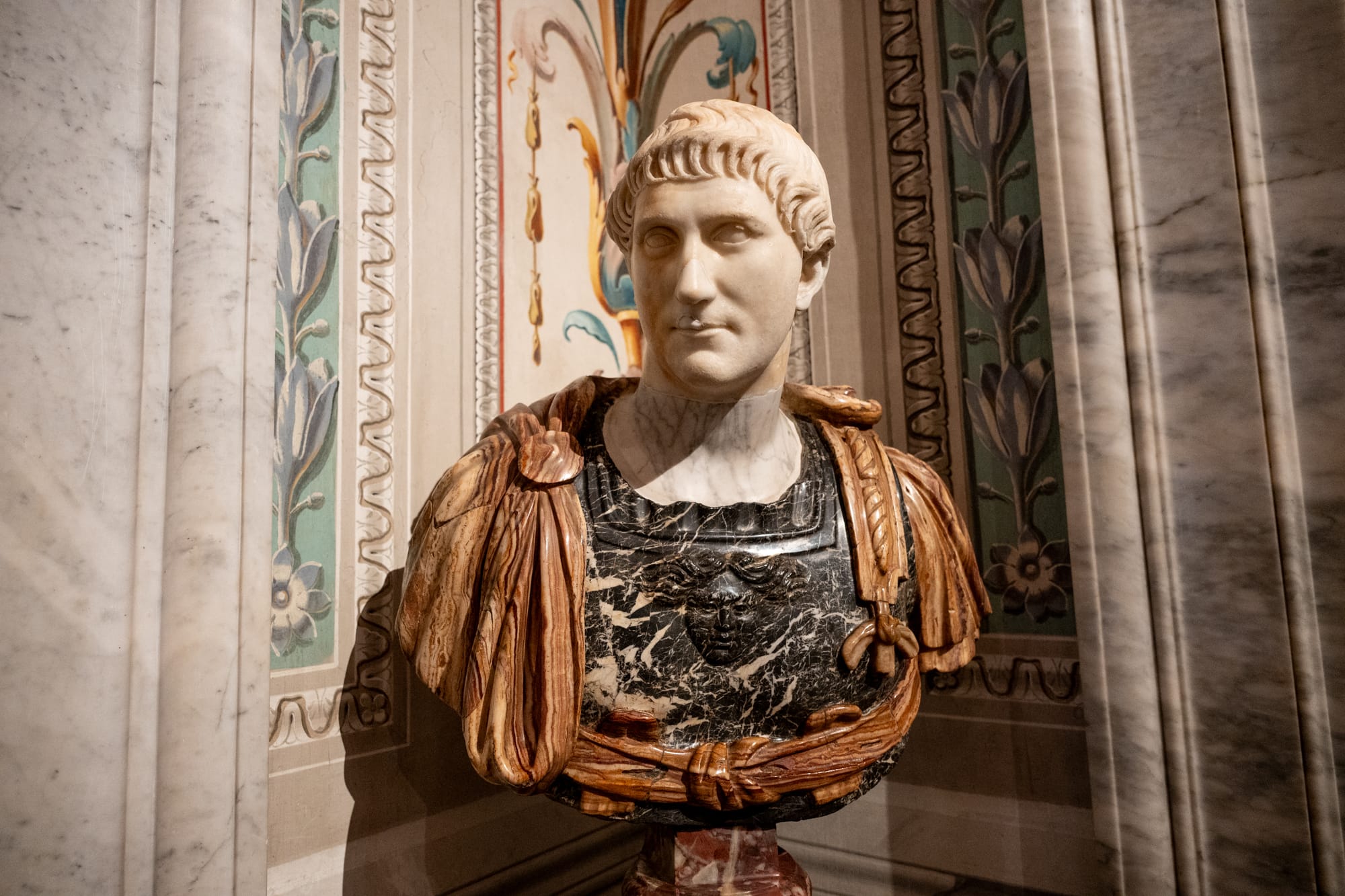
Thiel suggests that the various pax-es (Pax Romana, Pax Britannica, Pax Americana) represent the katachontic power of empires to restrain the forces of armageddon, though this again points to his facile and Anglo-centric understanding of history. The Pax Romana was itself a marketing term used by Roman historians to explain how wonderful their empire was, and it conveniently forgets that the period wasn’t very peaceful at all outside the imperial core. The devastating Roman-Persian wars and brutal repression of the Jewish population, which resulted in the sacking of Jerusalem, took place during the Pax Romana, and I suspect the people of India, for example, did not find Pax Britannica so peaceful. So, too, for the hundreds of thousands of civilians dead in the wake of America’s invasion of Iraq. An empire’s peace exists only for the beneficiaries of imperial violence, not for its victims, but Thiel doesn’t care about any of that.
Once his heuristic for identifying the new Rome had been sufficiently explained, Thiel went on to show how he sees America as the contemporary Rome. First, he said that we rule the world, militarily, through our drone program and the ubiquitous presence of American military bases all around the world. This is a particularly salient point coming from Thiel, whose influence on companies like Palantir and Anduril guarantee that he is at the center of companies participating in international power projection. A drone manufactured by a Thiel company can receive orders via software produced by a Thiel company to take action based on intelligence produced by a Thiel company to blow up a wedding anywhere in the world. And to be clear, to Peter Thiel, that is a very good thing.
Additionally, according to Thiel, we rule the world financially, through the dollar as the world’s reserve currency. Additionally, through the Five Eyes surveillance agreement, we can track flows of money to and from anywhere in the world, ensuring that no underground economy can really rival the one driven by the dollar.
Finally, Thiel said that we rule the world ideologically, as the classic “city on a hill” trope suggests, as a shining beacon of freedom and capitalist innovation. The global adoption of English as the language of finance and capital, as well as the massive concentrations of capital in places like New York City and Silicon Valley, ensure our dominance in diverse arenas of cultural power, from academia to venture capital.
As Thiel has said before, he believes that any power sufficient to act as katachon can also act as an antichristic force if no longer allowed to expand. He then pointed to the notion that the United States houses more guns than people, our outsized rate of incarceration, and to the continued use of the death penalty as evidence that we are using our “violence and insanity” to continue to act as katachon. He warned, however, that we are teetering on the precipice of becoming antichristic by losing sight of the untrammeled imperial ambitions that put the country in its current position.
To be clear, Thiel is suggesting that to act as katachon, an empire needs to engage in precisely the kinds of omnicidal policies that have defined the United States as an unmitigated danger to the rest of the world in the decades following the second World War. He claimed that the ability to unilaterally destroy the world in nuclear fire made the President a “semi-divine figure,” a sort of modern-day Mars who holds the ability to save or destroy the world with his will.
He then closed his final lecture on the antichrist with the rhetorical question of if our modern Rome will survive its contemporary moment. The United States is the only nation in a position to save the world, said Thiel, and there is no successor in place. China can’t fill the role, for vague reasons, so we’re really in a bit of a pickle, civilizationally-speaking.
If the United States falls, Thiel said, then The West falls. And if The West falls, the world falls. The United States is the final katachon, according to Thiel. This is our last shot at a lasting civilizational peace. If we fail here, then the gates of hell will swing wide open and the antichrist will march forth, destroying everything we have built.
After Nashville: Which way, western man?
Peter Thiel’s antichrist lectures represent the worst form of Silicon Valley brainrot, condensing the tech and VC world’s utter disdain for history and culture alongside their omnicidal dedication to a set of material conditions that have accelerated everything from income inequality to climate change. What’s worse is that Thiel stands at the apex of these social forces, dropping dead-eyed psychos off on nonprofit and defense contractor boards like he’s shaking off dandruff.
When I decided to attend these talks, I had hoped for a window into the mind of one of the most destructive businessmen of our age, and I got exactly what I wanted. What I saw was a mind utterly devoid of creativity and joy, someone whose surface-level readings of the various texts he engaged were shockingly, holistically disappointing. Peter Thiel frequently gets referred to as a dangerous genius, and he is certainly good at backstabbing his business partners and wielding power.
But I heard nothing in these talks I haven’t heard a hundred times before from wild-eyed evangelical conspiracy theorists, shark-eyed neocon operatives, and the unfortunate souls stuck in the Silicon Valley discourse matrix. Sticking Pat Robertson and a handful of nazis in the microwave doesn’t produce good or interesting arguments, it turns out. Instead, it simply produces the same old, tired tropes and historical misreadings in a new venue.
My main takeaway from these talks is that no one should be afraid of Peter Thiel. He’s just another in a long line of authoritarian misanthropes who have fled to Argentina to avoid accountability for what they’ve done. His flashlight-under-the-chin talk about the antichrist and armageddon are just a circus barker’s trick to make you look away from the very banal, very human evil he has perpetuated.
The only substantive question I’m left with is what exactly Peter Thiel is afraid of. He has more money than God, an army of sycophants, and numerous homes he can use to hide from the world. But these lectures sound like they come from a man afraid of the future, which, ultimately, means he’s afraid of his own actions. He has helped shape the world into what it is becoming, and maybe, in his secret heart, he fears armageddon and the final judgement because he fears what may become of his soul.
I have no words of comfort to offer him.